

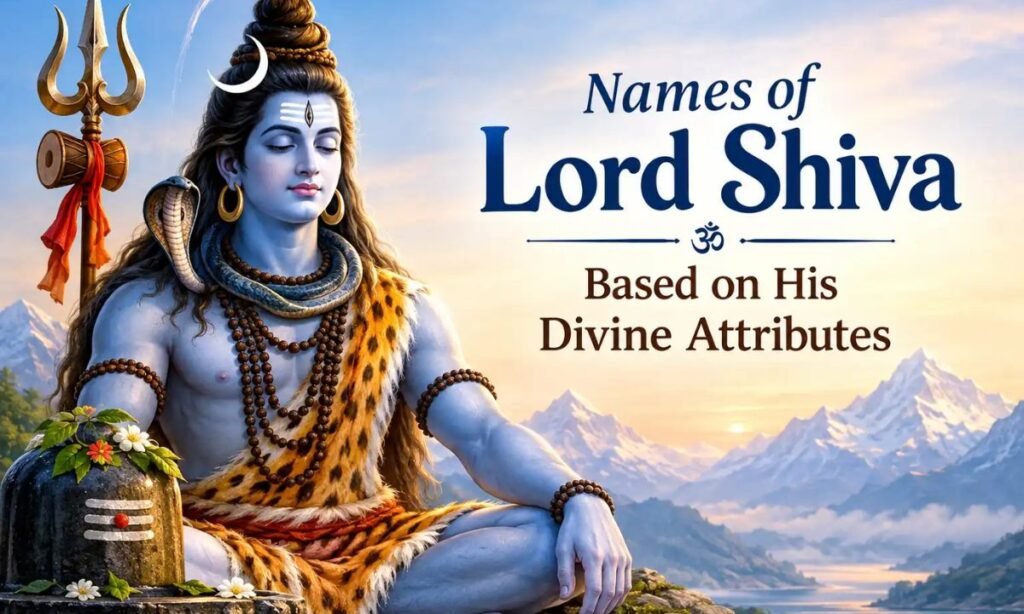
Lord Shiva is known by many sacred names, and each name reflects a different quality, power, or aspect of his divine nature. From strength and wisdom to compassion, protection, meditation, and transformation, these names offer a deeper understanding of how Shiva is described in Hindu tradition.
The Names of Lord Shiva Based on His Divine Attributes highlight the qualities associated with him rather than simply presenting a long list of names. Some names emphasize his role as a powerful protector, while others reflect his peaceful nature, spiritual wisdom, connection with nature, or role in cosmic transformation.
Whether you are looking for a meaningful name for a baby boy, exploring Hindu mythology, or simply interested in the different names of Lord Shiva, this collection can help you discover names connected to specific divine attributes. Explore each category below to learn the meaning and significance behind these powerful Shiva names.
Lord Shiva Names Generator
Names of Lord Shiva That Represent Strength and Power
- Mahadeva — The Great God
- Mahesh — Great Lord
- Mahabala — One of great strength
- Rudra — The fierce and powerful one
- Ugra — The fierce one
- Bhima — The mighty or formidable one
- Bhairava — The fierce form of Shiva
- Veerabhadra — The heroic and powerful warrior
- Tripurantaka — Destroyer of Tripura
- Tripurari — Enemy of Tripura
- Pinaki — Bearer of the Pinaka bow
- Dhanurdhara — Bearer of the bow
- Trilokesh — Lord of the three worlds
- Triloknath — Lord of the three realms
- Sarveshvara — Lord of all
- Parameshvara — Supreme Lord
- Jagadisha — Lord of the universe
- Jagannatha — Master of the universe
- Gajasurasamhara — Destroyer of Gajasura
- Andhakasuradahana — Destroyer of the demon Andhaka
Names of Lord Shiva That Represent Wisdom and Knowledge
- Dakshinamurti — Shiva as the divine teacher
- Adiyogi — The first yogi
- Yogeshwara — Lord of yoga
- Yogesh — Lord of yoga
- Jnanamurti — Embodiment of knowledge
- Jnaneshwara — Lord of knowledge
- Jagadguru — Teacher of the universe
- Vedakarta — Knower or teacher of the Vedas
- Vedatman — Essence of the Vedas
- Vedajna — Knower of the Vedas
- Sarvajna — All-knowing
- Sarvavid — Knower of all
- Tattvavit — Knower of ultimate truth
- Medhavi — Wise and intelligent
- Mahajnani — Great knower
- Chaitanya — Divine consciousness
- Prajnanam — Supreme knowledge
- Paramajyoti — Supreme divine light
- Yogadhyaksha — Lord of yoga
- Mahayogi — The great yogi
Names of Lord Shiva That Represent Compassion and Kindness
- Ashutosh — One who is easily pleased
- Bholenath — The simple and innocent Lord
- Shambhu — Source of happiness
- Shankara — Bestower of happiness and well-being
- Dayalu — Compassionate one
- Karunakar — One who is compassionate
- Karunamaya — Full of compassion
- Kripalu — Merciful one
- Kripanidhi — Treasure of mercy
- Dayanidhi — Treasure of compassion
- Bhaktavatsala — Loving toward devotees
- Bhaktapriya — Beloved of devotees
- Bhaktabandhava — Friend and protector of devotees
- Anugrahaprad — Bestower of grace
- Varada — Giver of blessings
- Abhayaprada — Giver of fearlessness
- Dukhaharta — Remover of sorrow
- Ashraya — Refuge and source of protection
- Sharanagata — One who provides refuge
- Mangalakara — Bestower of auspiciousness
Also read Lord Shiva Boys Names
Names of Lord Shiva That Represent Peace and Auspiciousness
- Shiva — The auspicious one
- Shankara — Bestower of happiness
- Shambhu — Source of joy and well-being
- Sadasiva — The eternally auspicious one
- Sadashiva — The ever-auspicious Lord
- Shantamurti — Embodiment of peace
- Shanta — Peaceful one
- Mangalakara — Bestower of auspiciousness
- Mangalanatha — Lord of auspiciousness
- Kalyana — Auspicious and благful
- Kalyanasundara — Beautiful and auspicious one
- Somnath — Lord of the Moon
- Chandrashekhara — One who wears the Moon on his head
- Somashekhara — One crowned with the Moon
- Neelakantha — The blue-throated one
- Shivatma — The auspicious divine self
- Parameshvara — Supreme auspicious Lord
- Maheshvara — Great and supreme Lord
- Sarveshvara — Lord of all
- Shivankara — One who brings auspiciousness
Names of Lord Shiva That Represent Protection and Fearlessness
- Abhayankara — Giver of fearlessness
- Abhayaprada — Bestower of freedom from fear
- Bhairava — Fierce protector
- Kaalabhairava — Fierce form associated with time
- Kshetrapala — Protector of the sacred place
- Pashupati — Lord and protector of living beings
- Pashupatinath — Lord of all living beings
- Mrityunjaya — Conqueror of death
- Tryambaka — The three-eyed Lord
- Trilochana — The three-eyed one
- Pinakapani — One who holds the Pinaka bow
- Shulapani — One who carries the trident
- Trishuladhari — Bearer of the trident
- Dandapani — One who holds a staff
- Khadgadhara — Bearer of a sword
- Vighnahara — Remover of obstacles
- Rakshakarta — Protector
- Umapati — Consort of Uma
- Krittivasa — One who wears an animal hide
- Mahakala — Great Lord of Time
Names of Lord Shiva That Represent Meditation and Spirituality
- Adiyogi — The first yogi
- Mahayogi — The great yogi
- Yogeshwara — Lord of yoga
- Yogesh — Lord of yoga
- Yogadhyaksha — Lord of yoga
- Dakshinamurti — Divine teacher of spiritual wisdom
- Dhyaneshwara — Lord of meditation
- Dhyanagamya — One who is reached through meditation
- Yogadhara — Support or foundation of yoga
- Yogin — One devoted to yoga
- Yogiraja — King of yogis
- Tapomaya — Embodiment of spiritual austerity
- Tapasvi — One devoted to spiritual discipline
- Jatadhara — One with matted hair
- Kapardin — One with matted or braided hair
- Digambara — One whose garment is the directions
- Avadhuta — One who has renounced worldly attachments
- Sthanu — The steadfast and immovable one
- Sthiradhira — One with steady wisdom
- Paramatman — The Supreme Self
Names of Lord Shiva That Represent Destruction and Transformation
- Rudra — The fierce and powerful one
- Samhara — The one associated with dissolution
- Samhartre — The destroyer
- Hara — The remover or destroyer
- Harahara — Remover of suffering and negativity
- Kalantaka — Conqueror of death and time
- Kaalabhairava — Fierce form associated with time
- Mahakala — Great Lord of Time
- Tripurantaka — Destroyer of Tripura
- Tripurari — Enemy of Tripura
- Andhakasuradahana — Destroyer of Andhaka
- Gajasurasamhara — Destroyer of Gajasura
- Krittivasa — One who wears the hide of an animal
- Ugra — The fierce one
- Bhima — The formidable one
- Bhairava — The terrifying or fierce one
- Virabhadra — The heroic and powerful warrior
- Kapalabhrit — Bearer of the skull
- Kapalika — One associated with the skull
- Antaka — The one who brings an end
Names of Lord Shiva That Represent Time and Eternity
- Mahakala — Great Lord of Time
- Kaalabhairava — Fierce form of Shiva associated with time
- Kalantaka — Conqueror of time and death
- Mrityunjaya — Conqueror of death
- Tryambaka — The three-eyed one
- Trilochana — Three-eyed Lord
- Ananta — Endless or infinite one
- Anadi — One without a beginning
- Anantadeva — Infinite divine Lord
- Sadasiva — The eternally auspicious one
- Sadashiva — Ever-auspicious and eternal Lord
- Nitya — Eternal one
- Shashvata — Everlasting one
- Avyaya — Imperishable one
- Akshara — Imperishable or eternal one
- Sanatana — Eternal and ancient one
- Parabrahma — Supreme eternal reality
- Paramatman — Supreme Self
- Adideva — Primordial or first divine being
- Adinatha — Primordial Lord
Names of Lord Shiva That Represent Creation and Cosmic Energy
- Srishtikarta — Creator of the universe
- Jagadisha — Lord of the universe
- Jagannatha — Lord of the world
- Vishvanatha — Lord of the universe
- Vishveshvara — Lord of the universe
- Jagadguru — Teacher of the universe
- Parameshvara — Supreme Lord
- Maheshvara — Great and supreme Lord
- Sarveshvara — Lord of all
- Brahma — The creative principle
- Hiranyagarbha — Golden cosmic womb
- Vishvatma — Soul of the universe
- Vishvarupa — One whose form encompasses the universe
- Vishvamurti — Embodiment of the universe
- Jagatpati — Lord of the world
- Jagadadhara — Support of the universe
- Lokeshvara — Lord of the worlds
- Trilokesh — Lord of the three worlds
- Triloknath — Lord of the three realms
- Chaitanya — Divine consciousness
Names of Lord Shiva Associated With Divine Vision
- Tryambaka — Three-eyed Lord
- Trilochana — The three-eyed one
- Trinetra — One with three eyes
- Trinayana — One with three eyes
- Bhalanetra — One with an eye on the forehead
- Lalataksha — One with an eye on the forehead
- Phalalocana — One with an eye on the forehead
- Somanetra — One whose eye is associated with the Moon
- Surya-netra — One associated with the Sun as an eye
- Agninetra — One associated with fire as an eye
- Jnanachakshu — Eye of wisdom
- Jnanalochana — One whose vision is wisdom
- Divyadrishti — Divine vision
- Sarvadarshi — One who sees all
- Sarvajna — All-knowing one
- Antaryami — Inner knower
- Vishvanetra — Cosmic or universal eye
- Lokachakshu — Eye of the world
- Surya — Associated with the Sun and divine illumination
- Chandrashekhara — One who bears the Moon on his head
Names of Lord Shiva Associated With Nature and the Elements
- Pashupati — Lord of living beings
- Pashupatinath — Lord of all creatures
- Bhutapati — Lord of living beings
- Bhutanatha — Lord of beings
- Girisha — Lord of the mountains
- Girijapati — Consort of Parvati, daughter of the mountain
- Kailashnath — Lord of Mount Kailash
- Kailashapati — Lord of Kailash
- Gangadhara — Bearer of the Ganga
- Gangadhara — One who holds the Ganga in his hair
- Chandrashekhara — One who wears the Moon on his head
- Somnath — Lord of the Moon
- Vayunatha — Lord associated with the wind
- Bhujangabhushana — One adorned with serpents
- Nagabhushana — One adorned with snakes
- Vyomakesha — One whose hair represents the sky
- Nilalohita — Blue and red-hued one
- Vanavasi — One who dwells in forests
- Vrishavahana — One who rides a bull
- Umapati — Consort of Uma, associated with the natural and divine feminine
Names of Lord Shiva Associated With His Sacred Symbols
- Trishuladhari — Bearer of the trident
- Shulapani — One who holds the trident
- Pinaki — Bearer of the Pinaka bow
- Chandrashekhara — One who wears the Moon
- Gangadhara — One who bears the Ganga
- Neelakantha — The blue-throated one
- Jatadhara — One with matted hair
- Kapardin — One with matted or braided hair
- Nagabhushana — One adorned with serpents
- Bhujangabhushana — One adorned with snakes
- Vrishavahana — One who rides a bull
- Pashupati — Lord of living beings
- Kapalabhrit — Bearer of a skull
- Krittivasa — One who wears an animal hide
- Digambara — One whose garment is the directions
- Bhasmadhari — One who wears sacred ash
- Bhasmapriya — One fond of sacred ash
- Rudrakshamala-dhara — One who wears a Rudraksha garland
- Damarudhara — Bearer of the damaru drum
- Pinakapani — One who holds the Pinaka bow
Names of Lord Shiva That Represent His Role as a Teacher
- Dakshinamurti — Shiva as the divine teacher
- Jagadguru — Teacher of the universe
- Adiguru — The first teacher
- Adiyogi — The first yogi
- Yogeshwara — Lord of yoga
- Yogesh — Lord of yoga
- Yogadhyaksha — Lord of yoga
- Mahayogi — The great yogi
- Jnanamurti — Embodiment of knowledge
- Jnaneshvara — Lord of knowledge
- Vedajna — Knower of the Vedas
- Vedakarta — Teacher or knower of the Vedas
- Sarvajna — All-knowing one
- Sarvavid — Knower of all
- Tattvavit — Knower of ultimate truth
- Guru — Spiritual teacher
- Gurudeva — Divine teacher
- Rishinatha — Lord associated with sages
- Muninatha — Lord of sages
- Yoginatha — Lord of yogis
Names of Lord Shiva That Represent Devotion and Blessings
- Ashutosh — One who is easily pleased
- Bholenath — Simple and innocent Lord
- Bhaktavatsala — Loving toward devotees
- Bhaktapriya — Beloved of devotees
- Bhaktabandhava — Friend of devotees
- Bhaktarakshaka — Protector of devotees
- Varada — Bestower of blessings
- Varadakara — Giver of boons
- Abhayaprada — Giver of fearlessness
- Anugrahaprad — Bestower of divine grace
- Kripalu — Merciful one
- Kripanidhi — Treasure of mercy
- Dayanidhi — Treasure of compassion
- Dayakara — Bestower of kindness
- Karunakar — Compassionate one
- Mangalakara — Bestower of auspiciousness
- Dukhaharta — Remover of sorrow
- Sharanagata-vatsala — One who cares for those seeking refuge
- Kalyanadata — Giver of well-being
- Prasannatma — Serene and gracious spirit
Names of Lord Shiva That Reflect His Different Divine Forms
- Sadashiva — The eternally auspicious form
- Mahadeva — The Great God
- Rudra — The fierce form
- Bhairava — The fierce and protective form
- Nataraja — King of the cosmic dance
- Dakshinamurti — Shiva as the divine teacher
- Ardhanarishvara — Shiva united with the feminine form of Shakti
- Harihara — Combined form of Shiva and Vishnu
- Neelakantha — The blue-throated form
- Mrityunjaya — Conqueror of death
- Kaalabhairava — Fierce form associated with time
- Tripurantaka — Destroyer of Tripura
- Virabhadra — The heroic warrior form
- Sharabha — A powerful mythological form of Shiva
- Pashupati — Lord of living beings
- Yogeshwara — Lord of yoga
- Adiyogi — The first yogi
- Somnath — Lord of the Moon
- Vishwanatha — Lord of the universe
- Kailashnath — Lord of Mount Kailash
How to Choose a Lord Shiva Name Based on Its Meaning
When choosing a Lord Shiva name, start by considering the quality or attribute you want the name to represent. For example, names such as Mahadeva and Mahesh convey divine greatness, while Ashutosh reflects Shiva’s easily pleased and compassionate nature.
You can also choose a name according to a particular spiritual quality. Names such as Adiyogi, Yogeshwara, and Dakshinamurti connect with yoga, meditation, and wisdom, while Mrityunjaya, Abhayaprada, and Bhairava are associated with overcoming fear, protection, and strength.
Finally, consider the name’s meaning, pronunciation, cultural significance, and personal connection before making your choice. A meaningful Shiva name can serve as a reminder of the particular divine quality that resonates most with your family.
Frequently Asked Questions
What are the most powerful names of Lord Shiva?
Some powerful names of Lord Shiva include Mahadeva, Mahesh, Rudra, Bhairava, Mahakala, and Tripurantaka. These names are associated with Shiva’s divine power, strength, destruction, and cosmic authority.
Which Lord Shiva name represents wisdom?
Dakshinamurti is one of the best-known names representing Shiva as a divine teacher and source of spiritual wisdom. Jnanamurti and Jnaneshwara are also associated with knowledge and wisdom.
Which Lord Shiva name means compassionate?
Dayalu means compassionate, while Karunakar means one who is compassionate. Kripalu is another name associated with mercy and kindness.
Which Shiva name represents protection?
Abhayaprada means “giver of fearlessness,” making it associated with protection and freedom from fear. Pashupati and Bhairava are also associated with protective aspects of Shiva.
Which Lord Shiva name is associated with meditation?
Adiyogi means the first yogi and is strongly associated with yoga and meditation. Yogeshwara, meaning Lord of Yoga, is another meaningful choice.
What does the name Mahadeva mean?
Mahadeva means “Great God” or “Great Divine Lord.” It is one of the most revered names of Lord Shiva and reflects his supreme divine status.
What does the name Neelakantha mean?
Neelakantha means “blue-throated one.” The name refers to the traditional story in which Shiva held the poison produced during the churning of the cosmic ocean in his throat.
Which Lord Shiva names are suitable for a baby boy?
Names such as Shiv, Shiva, Rudra, Mahesh, Shankar, Neel, Omkar, Shambhu, and Ashutosh are commonly used as boy names and are associated with Lord Shiva.
Final Words
Lord Shiva is known by countless sacred names, and each one reflects a different aspect of his divine nature. From strength, wisdom, and compassion to protection, meditation, transformation, and cosmic energy, these names offer meaningful ways to understand the many qualities associated with Shiva.
Exploring the Names of Lord Shiva Based on His Divine Attributes can help you choose a name that carries a deeper meaning and spiritual significance. Whether you are searching for a baby boy’s name or simply learning more about Lord Shiva, each name can represent a quality you wish to celebrate.
Take time to consider the meaning, pronunciation, and significance of your favorite name before making your choice. A meaningful Lord Shiva name can be more than just a name—it can serve as a lasting reminder of the divine quality it represents.
